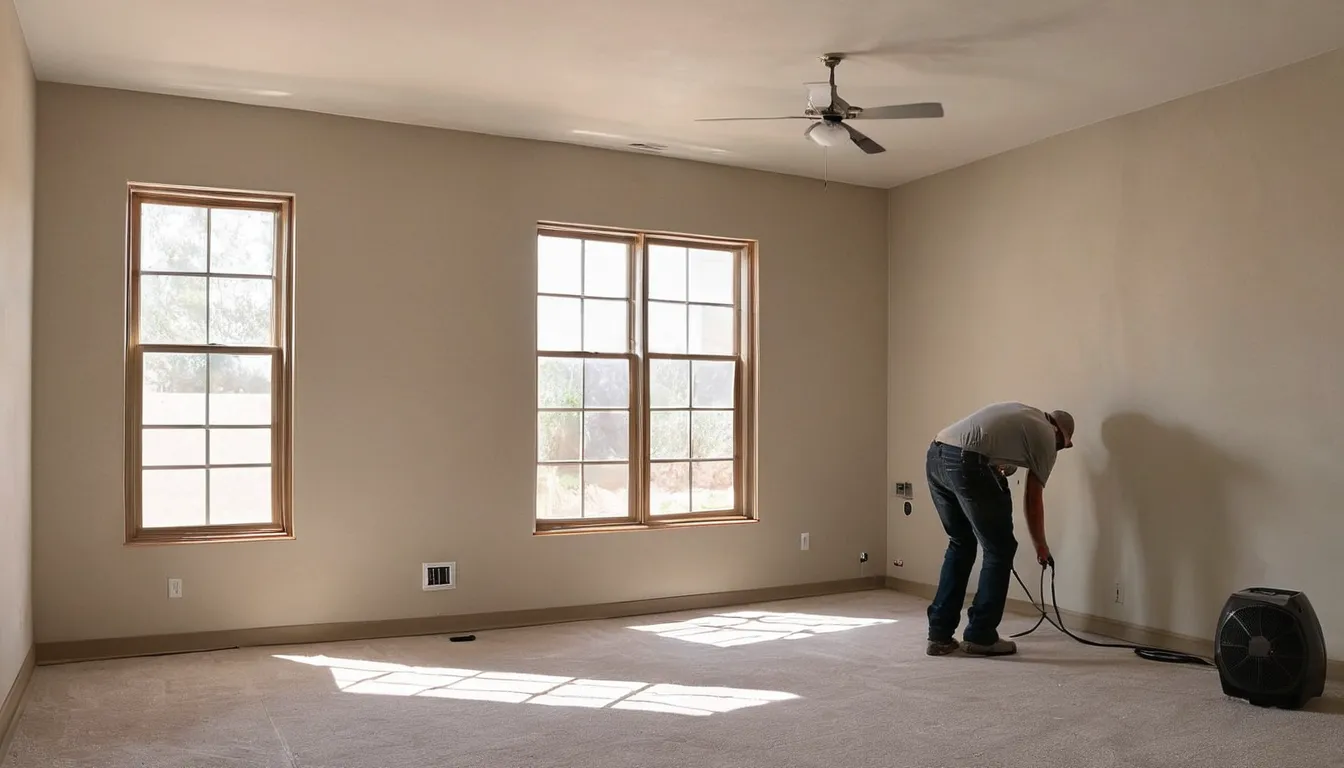
Water Extraction and Structural Drying in Albuquerque
Request extraction and drying
Water extraction means removing standing water. Providers use pumps and strong vacuums to do it. Structural drying comes next. The structure is the frame of your home: walls, floors and the wood inside them. Drying them takes air movers (low, strong fans) and dehumidifiers (machines that pull water out of the air), often for several days.
Artfinancier Water Restoration connects homeowners in Albuquerque and the towns nearby with independent providers who do this work. The dry air here helps drying, but it does not reach inside a wall or under tile. That still takes the right gear and a moisture meter to confirm the job is done.
Standing Water? Get It Out
The longer water sits, the deeper it goes. Start with what you can do safely.
What You Can Do
- Turn off the water at the main valve
- Stay away from water near outlets and cords
- Take photos of every wet area
- Mop up clean water on tile or vinyl
- Lift rugs and move furniture
What You Cannot Do
A shop vacuum can clean up a puddle. It cannot pull water out of carpet pad, walls or the space under floors. That needs pro gear.
Why Fast Extraction Matters
Water moves into everything it touches. It climbs drywall. It runs under baseboards. It soaks into wood. Removing it early means there is less to dry. That can save carpet, trim and cabinets. It also lowers the chance of mold.
How Extraction Works
Pumps
For deep water, a pump moves most of it out fast.
Extractors
An extractor is a strong vacuum. It pulls water out of carpet and pad. Badly soaked pad often has to go.
Hard Floors
Wet vacuums and squeegees clear tile, vinyl and concrete. Water under tile or cabinets may need small openings to reach.
How Structural Drying Works
Air Movers
These fans blow across walls and floors. They help water leave the surface.
Dehumidifiers
These take the water out of the air, so it does not soak back in.
Opening Walls
Sometimes small holes are drilled at the bottom of a wall. Or baseboards come off. This lets air reach inside.
Daily Checks
The provider reads the moisture levels each visit. They move the gear as parts of the house dry.
How Long Drying Takes
Most rooms take three to five days. Thick wood, plaster and concrete take longer. Dry desert air can speed things up, but it is not enough by itself. The home is dry when readings match parts of the house that never got wet.
While You Wait
Keep the gear running. It is loud, and that is normal. Keep doors and windows closed unless told otherwise. Do not change the thermostat much without asking. Keep kids and pets away from cords. Take a photo of the setup each day.
Questions to Ask
- What reading means dry for each material?
- How often will you check?
- Can I get a copy of the readings?
- What will you remove and why?
- Is the estimate in writing?
After Drying: Prevent It
Ask what caused the water. Fix that. If it was a hose, replace it with braided steel. If it was the water heater, flush it each year. If it was a roof drain, clear it before storm season.
Tile, Stucco and Slab Floors
Many homes here have tile floors on a concrete slab. Tile does not soak up water, but the grout and the concrete below can. Water can also slip under tile at the edges and stay there. A provider uses a meter to check the slab and the bottom of nearby walls. They may need to run drying gear longer on a slab than on a wood floor.
Stucco walls can hold water too, especially near the ground or under a window. If water got into a wall from outside, the inside may look dry while the wall stays wet. A meter shows the truth. Ask the provider to check both sides of the wall.
Swamp Coolers and Water Lines
An evaporative cooler, often called a swamp cooler, uses water to cool the air. Its water line and pan can leak onto the roof or into the ceiling below. If your leak came from the cooler, have the line and pan fixed before you turn it back on.
Once the cooler is fixed, check the ceiling below it now and then for new stains, especially after the first few hot days of summer.
What's Included
Pumping Out Water
Pumps and wet vacuums remove standing water from floors and rooms.
Carpet Extraction
Strong extractors pull water out of carpet and pad.
Fans and Dehumidifiers Running
Pro drying gear works on walls, floors and framing for days.
Moisture Checks Daily
Meter readings each visit show progress and confirm the home is fully dry.
What Extraction and Drying Usually Cost in the U.S.
The size of the area, how much water there is and how many days the gear runs set the price. These are typical U.S. ranges. Ask for a written quote.
| Job | Typical U.S. range | Notes |
|---|---|---|
| Extraction, one room | $200 to $800 | Clean water |
| Extraction, more rooms | $800 to $2,500 | More water and time |
| Drying, per room | $300 to $1,200 | Several days of gear |
| Gear per unit per day | $50 to $150 | Fans and dehumidifiers |
| Carpet pad replacement | $300 to $1,500 | Soaked pad rarely dries well |
| Drying inside walls | $500 to $2,000 | Small holes or baseboard removal |
How It Works
Stop the Water
Close the main valve and stay clear of wet outlets.
Send a Request
Use the short form or call with a few details.
Extract and Set Up
The provider removes water and places the drying gear.
Check Until It Is Dry
Readings must match dry parts of the home.
Why Call Artfinancier Water Restoration
Quick First Steps
A short list shows what to do before the provider arrives.
Plain Words
Each tool is explained, so you know what is running and why.
Local Providers
Independent providers who serve the Albuquerque area with pro drying gear.
Your Choice
Read the written estimate first. No obligation.
Other Services
Need water extraction & structural drying services in Albuquerque?
- Short form, quick connection to providers
- Plain words, no trade jargon
- Independent providers in your area
- Prevention tips after repair
Water Extraction & Structural Drying Services FAQ
What is structural drying?
It means drying the parts of a home that hold it up and enclose it, like walls, floors and framing. Providers use air movers, dehumidifiers and meters to do it.
Does dry desert air dry water damage on its own?
It helps surfaces dry faster. It does not reach inside walls, under tile or into thick wood. Those spots still need pro gear and a meter check.
How long do drying fans need to run?
Usually three to five days. Some jobs take longer. The provider should check readings each visit and remove the gear only when the home is dry.
Tell us what happened
Water where it should not be? Send a short request or request a callback. We connect you with a provider near you.
No obligation